AI took my job as a developer
How building a serverless app on AWS with AI and spec-driven development reignited my passion for building, and gave my home projects a future.
How building a serverless app on AWS with AI and spec-driven development reignited my passion for building, and gave my home projects a future.
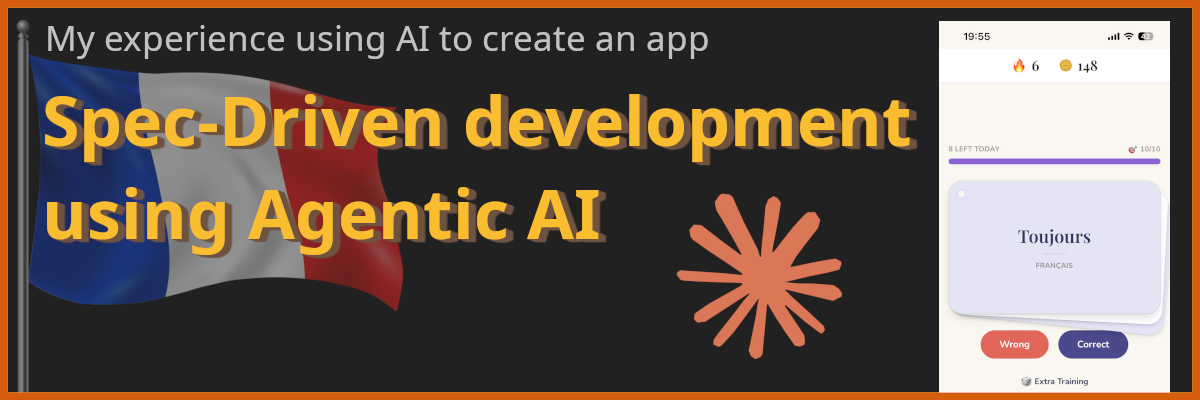
tl;dr: I created an app through spec driven development. The result was better than I expected. I now have a cool and fully functional flashcard app for practicing with spaced repetition. Sometimes you need an app Have you ever wanted to do something on your phone and though “surely there is an app for that”? And of course there is, BUT the app either has tons of annoying adds, or you have to pay a one time price or even worse, a subscription. ...

In early may I attended the AWS Summit in Stockholm. Not only was it my first ever Summit, I also had the pleasure of doing a presentation on the pre-summit event hosted by the AWS Nordic User Group. All in all it was a great experience! And to be able to better look back on it in the future, I wanted to try writing a summary of the event. Mostly my thoughts about it and my experience as a first timer at an AWS Summit. ...
Crossplane is a framework you run in Kubernetes to manage infrastructure as code. It can be used to build a self-service platform where developers “order” resources simply by pushing YAML to a repository. In this talk I compare it with Terraform and show how such a platform can be built. I wrote more about the day in my post about AWS Summit Stockholm 2026.
What is Athena AWS S3 (Simple Storage Service) is the most used AWS resource. In S3 you can store all types of data in a multitude of file formats: Parquet, ORC, JSON, CSV, different types of logs, dumps from web scraping, database backups or snapshots, the list goes on and on. You can use it as a data lake and chuck in all your data. Just like your favorite desktop junk drawer. But then the day comes when you actually want to look at your data. This could require heavy ETL pipelines transforming and loading the data over to a relational database where you finally could retrieve your data using SQL. ...
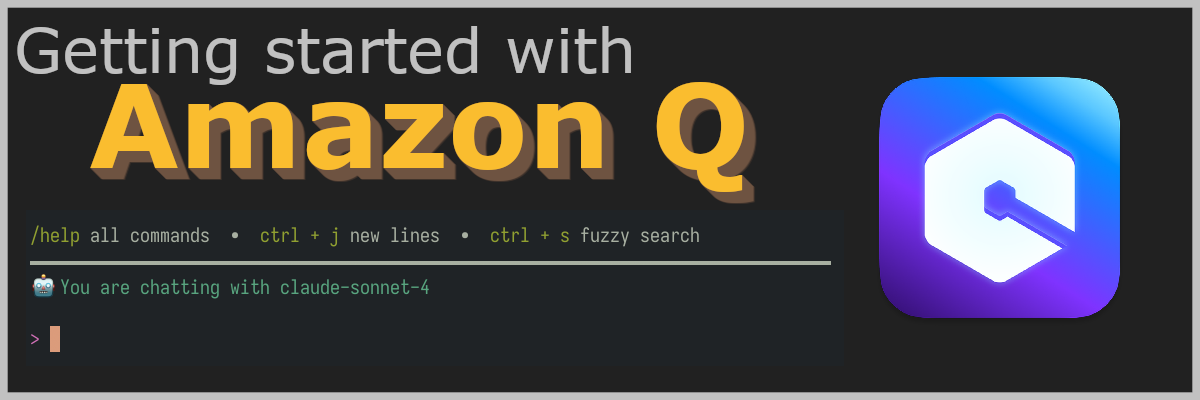
tl;dr: Amazon Q is a gen-AI assistant from AWS. Amazon Q Developer - Getting started. AWS has also made a Neovim plugin. AI, Gen-AI, LLMs, Agents, MCP. There is so much AI hype. Everywhere I look they talk about AI. “AI is the future. If you don’t learn to use it right now you will never catch up.” I’ve been kinda sceptical to AI. As a developer I have used AI since the beginning of ChatGPT and GitHub Co-pilot, which feels like forever ago even though it has only been about 2 years. It is nice to save time by making it write boiler plate code and it is fun to make it create stories and song lyrics. ...
Complete The Cloud Resume Challenge The Challenge Part 1: Get AWS Certified and complete The Cloud Resume Challenge Part 2: HTML - Create a website Part 3: CSS - Style your website Part 4: Static Website - Amazon S3 Part 5: HTTPS - Set up Amazon CloudFront Part 6: DNS - Custom domain name with Amazon Route 53 Part 7-12: Backend - Creating a serverless API and requesting it with JS –> Part 13-16: CI/CD - Commit, Build and Deploy with AWS CodePipeline <– tl;dr: Creating a CI/CD pipeline for the frontend and the backend. Automating the deployment with AWS CodePipeline using GitHub as the source repository. ...
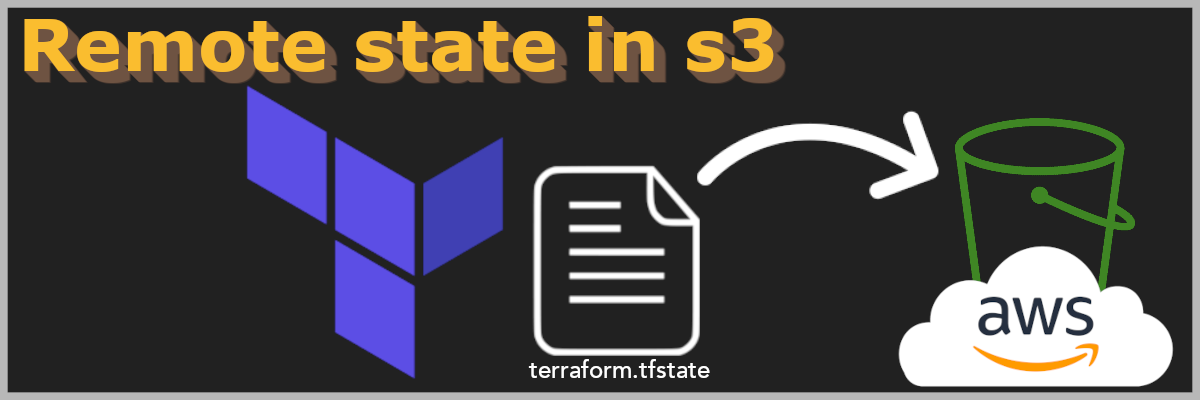
tl;dr: You can use S3 to store your Terraform state file remote. To migrate a local state file, add a backend "s3" {} block to your Terraform configuration and run terraform init -migrate-state. You no longer need to use DynamoDB for state locking, as S3 now has native support for this with use_lockfile = true. Table of Contents What is remote state? State locking Set AWS as a Terraform backend Migrating local state to S3 Conclusion What is remote state? When you run terraform apply, terraform will create a state file. When ever you make a change to your terraform configuration and apply it, terraform will check the difference between the config and the state before makeing the needed changes. ...
Complete The Cloud Resume Challenge The Challenge Part 1: Get AWS Certified and complete The Cloud Resume Challenge Part 2: HTML - Create a website Part 3: CSS - Style your website Part 4: Static Website - Amazon S3 Part 5: HTTPS - Set up Amazon CloudFront Part 6: DNS - Custom domain name with Amazon Route 53 –> Part 7-12: Backend - Creating a serverless API and requesting it with JS <– Part 13-16: CI/CD - Commit, Build and Deploy with AWS CodePipeline tl;dr:: Creating a serverless counter for our website using Lambda, DynamoDB, Api Gateway and Terraform then displaying it on our website using javascript. ...
Complete The Cloud Resume Challenge The Challenge Part 1: Get AWS Certified and complete The Cloud Resume Challenge Part 2: HTML - Create a website Part 3: CSS - Style your website Part 4: Static Website - Amazon S3 Part 5: HTTPS - Set up Amazon CloudFront –> Part 6: DNS - Custom domain name with Amazon Route 53 <– Part 7-12: Backend - Creating a serverless API and requesting it with JS Part 13-16: CI/CD - Commit, Build and Deploy with AWS CodePipeline tl;dr: Use Amazone Route 53 to register a custom domain name and point it to your CloudFront distribution. ...